
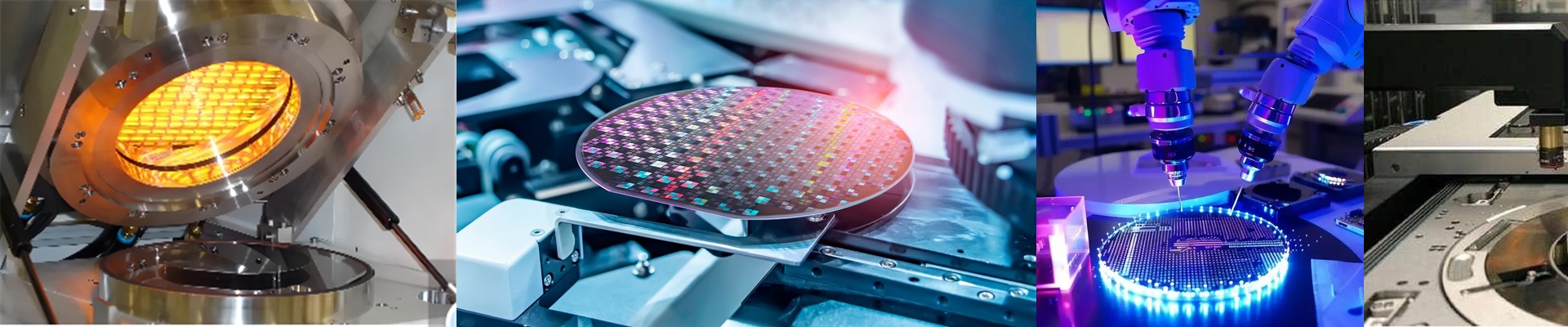

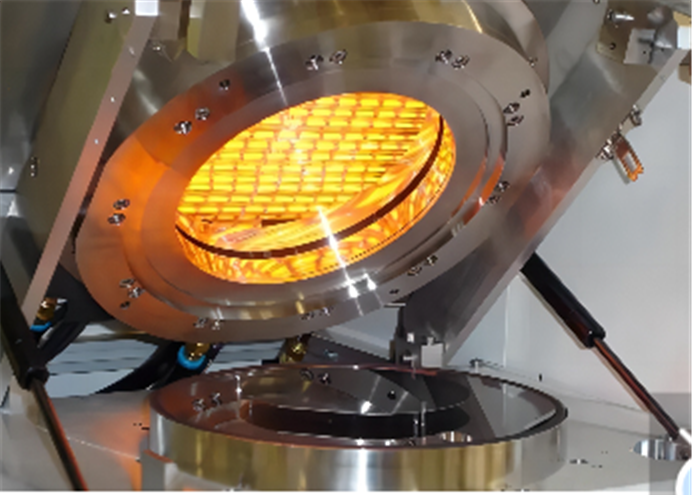
On the fab floor, photoresist bake isn’t some gentle warm-up—it’s the thermal budget that decides yield, one wafer at a time. A 1°C swing in soft bake or hard bake shifts CD, brings on scum, and pushes particle count the wrong way. We built our wafer IR heating system to take that variability off the table. Here’s what matters under the hood. We use short-wave IR with a quartz emitter window, and closed-loop pyrometry keeps wafer-level uniformity at ±0.1°C across the shot. Temperature settles in under 3 seconds, so you can keep pace with high-throughput lithography tracks without waiting on a thermal soak. Control comes in 0.1°C resolution, with multi-point calibration traceable to wafer-mapped profiles. The hot zone is cleanroom-ready for Class 1–100: low outgassing materials, laminar airflow compatibility, and zero particle generation verified by in-situ metrology. Power is 24 V DC with EMI-aware shielding, and the interface is SECS/GEM ready for line integration. You need heat you can count on, shift after shift, 24/7. Our IR heater runs 50,000+ hours with under 5% output drift, and it handles continuous duty without forced-air cooldown. Soft bake and hard bake land on target, so CD stays locked and defectivity drops. The fast response cuts idle time between wafers, and the stable setpoint means less scrap and rework. Energy use drops because the emitter heats on demand, not on standby. A couple of practical notes. The emitter window needs a cleanroom-compatible maintenance plan—wipe protocol and scheduled inspection—to keep transmission stable. Installation is straightforward, but give it a dedicated 24 V line and solid grounding to protect temperature control accuracy. Match the tool’s SECS/GEM parameters to your host, and you’ll see repeatability that holds across lots, days, and nodes.