

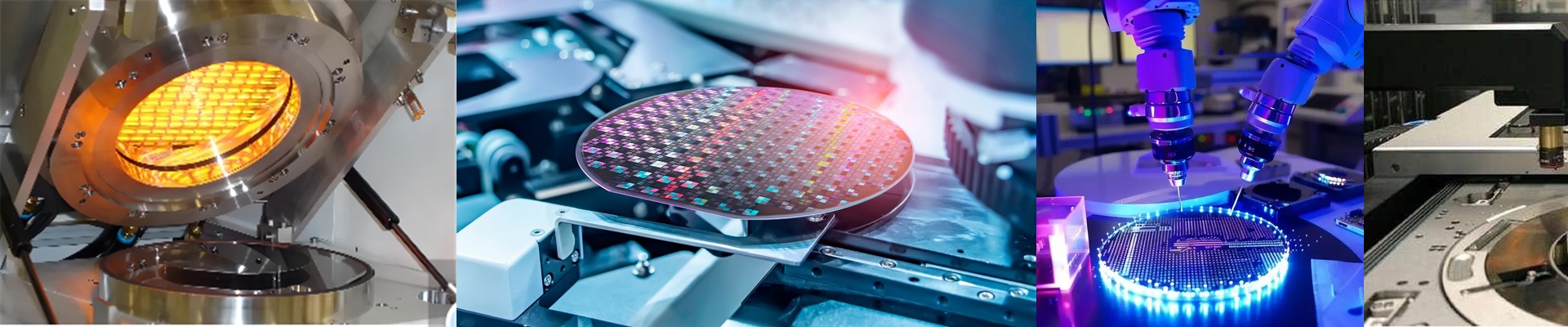

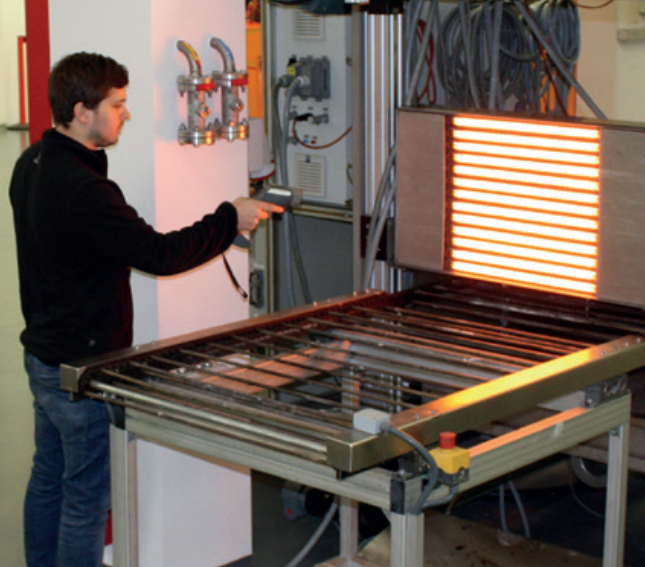
Out on the fab floor, a bake profile that’s drifting doesn’t scream for attention. It just quietly shaves critical dimensions, burns photoresist, and piles up scrap. When your old heater can’t hold uniformity across the wafer, you don’t need another patch. You need thermal control that acts like a real process parameter, not a wild card. What matters, technically We’ve swapped in infrared replacement heaters that give you sub-millimeter uniform heat, with repeatable temperature control. That’s exactly what photoresist soft bake and hard bake demand in terms of thermal stability. The emitters hit the mark fast, with clean heating and tight spatial control, so you don’t get thermal lag or hot spots. Wafer-level uniformity stays inside tight tolerance, and the system repeats the same thermal profile run after run. The payoff: critical CDs stay in spec, and line-of-sight heating stays consistent across the batch. Why it holds up in lithography In lithography, soft bake temperature directly sets photoresist thickness and makes edge bead removal behave. Hard bake has to be repeatable so the next etch and implant steps don’t force rework. Our heater swap keeps the thermal budget stable, cuts particle generation, and stays cleanroom-compatible from Class 1 to Class 100. You end up with fewer excursions, cycle times you can plan around, and measurable energy savings thanks to faster ramp rates and less idle power. Here’s what to keep in mind Retrofitting is straightforward, but the optics and emitter layout have to match the tool’s geometry and clearance. Check mounting, power connections, and interlocks against your equipment documentation. For top performance, confirm reflector alignment and cleanroom-compatible shielding, and put periodic emitter output checks on the schedule to keep long-term repeatability where it needs to be.